THE REASON TO BE
IN THE ROOM
Client entertainment has a specific failure mode: an activity so absorbing that nobody talks, or so dull that everyone checks their phone. Racing sits in a useful middle, as long as you do not run it like a competition.
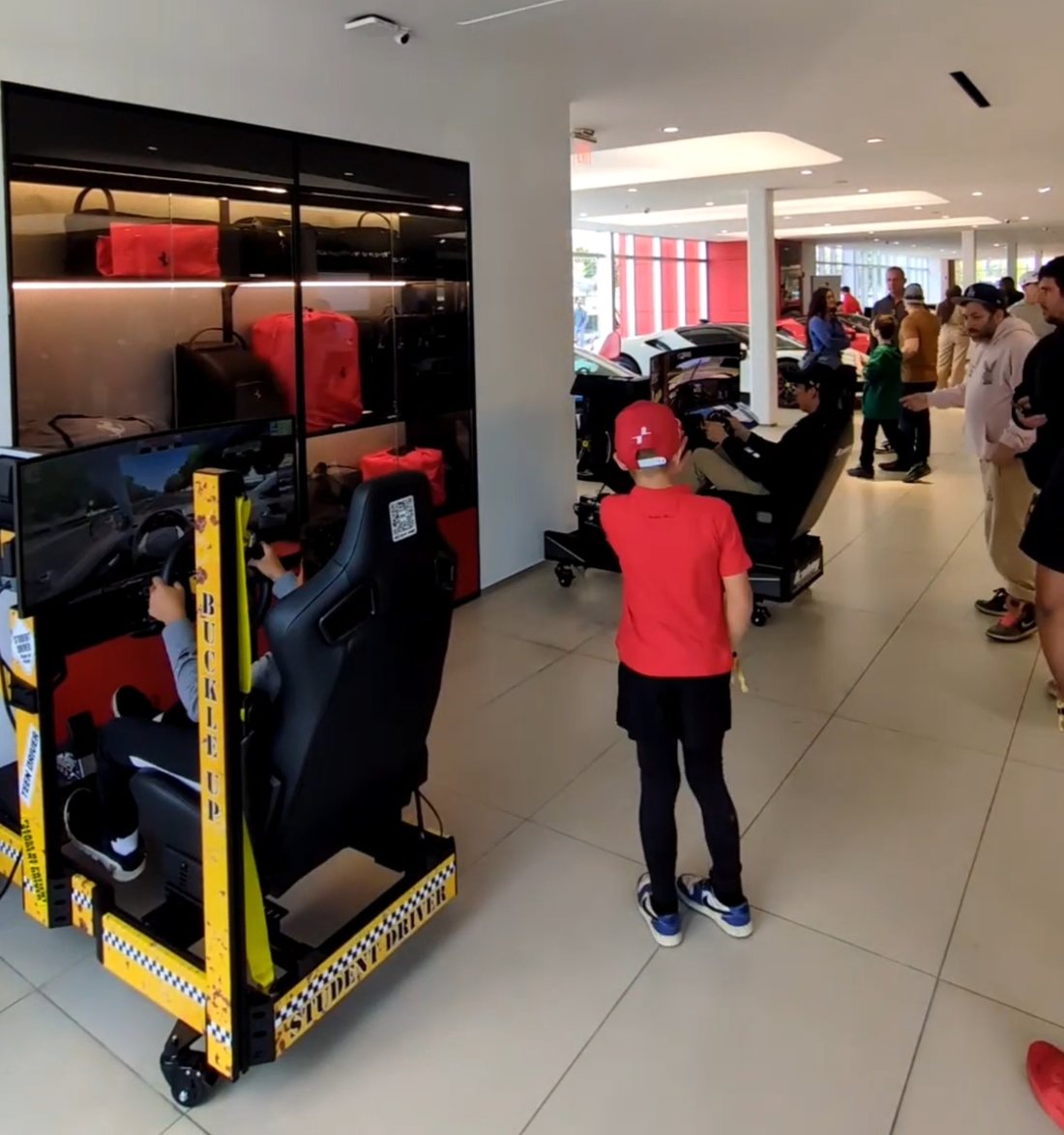
THE RACING IS THE BACKDROP
At a trade show the simulator is the objective. At a client dinner it is the excuse. That difference should change almost everything about how it is set up, and usually does not, which is why hospitality activations often feel like a corporate event that wandered into the wrong room.
The job here is to give people something to do with their hands and something easy to talk about. It is not to establish who is quickest. A structured competition forces everyone to pay attention to the same thing at the same time, which is the opposite of what you want when your team is trying to have four separate conversations.
What changes for hospitality
- Fewer rigs, longer sessions. Nobody should feel hurried out of the seat because a queue has formed.
- No formal competition. A quiet leaderboard people can look at if they want, rather than a scheduled bracket.
- Our staff run it. Your team should be talking to clients, not resetting sessions or explaining the pedals.
- Volume matters. Headphones or lower audio, so the room stays conversational.
- Check their policy first. Regulated industries, government clients and many large firms have gift and hospitality rules. Worth confirming before you invite.
THE OCCASIONS
PLANNING IT
One rig is often the right answer
For a group of ten to twenty, a single simulator running all evening usually works better than two. It becomes a focal point people gather around rather than an activity everyone has to take a turn at.
Where to put it
Adjacent to the main room rather than in it. People should be able to drift toward it and away again. Allow around 10 feet by 10 feet per simulator, and remember the 49 inch ultrawide display is the widest part, so a private dining room or a suite is usually workable.
Brief your own team
The most common mistake is your people spending the evening running the simulator because they are enjoying it. Our staff handle the activation so yours can do the job they came to do.
Delivery, setup, calibration, staffing and teardown are typically included, and your quote sets out exactly what is covered and for how many hours.
ALSO WORTH READING
TWO OTHER WAYS TO RACE
WHAT PLANNERS ASK
ENTERTAINING CLIENTS
IN FLORIDA?
Tell us the group size and the venue. Small hospitality formats are quoted differently from large activations.