SOMETHING THEY DID
NOT HAVE TO SIT THROUGH
Recognition events fail in a specific way: they end up being another meeting with catering. The test is whether anybody would choose to be there, and this is one of the few formats that passes it.
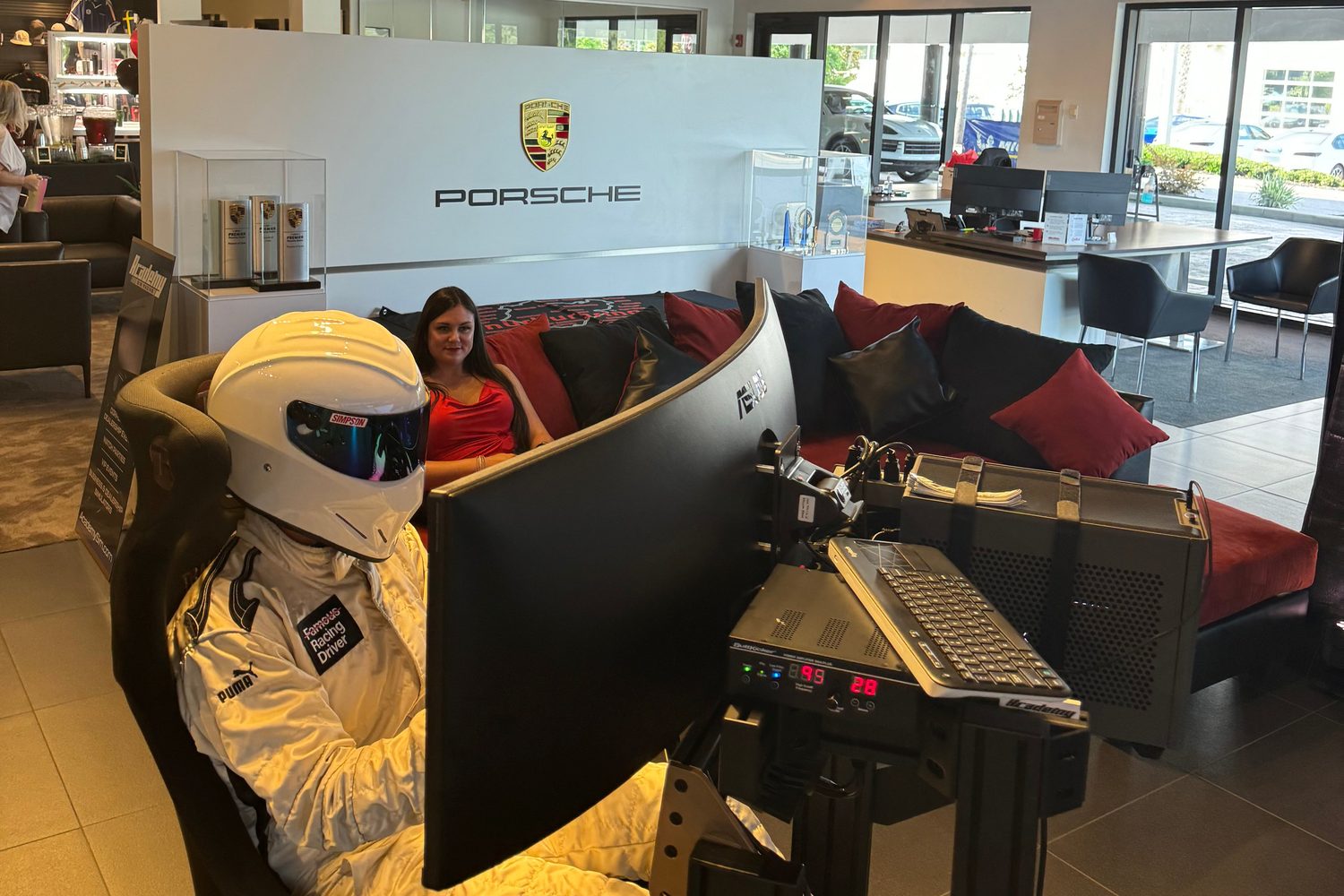
NO AGENDA, WHICH IS THE POINT
Almost every other event on this site has a commercial objective sitting behind it. An appreciation day does not, and that changes what a good setup looks like.
There is no lead capture, no branding requirement and nobody who needs to be impressed. The only measure is whether your people had a good time, which means the format should be built for inclusiveness rather than for competition. A leaderboard that one person dominates all afternoon is the wrong answer here even though it is the right answer at a trade show.
What we would do differently
- Driver aids on by default. Nobody should be embarrassed in front of colleagues. We turn them down only for people who ask.
- Longer sessions, less queueing. Standing in line is not a reward.
- Team formats over individual ones. A relay gets people mixing across departments, where a fastest lap board tends to be settled by the same few drivers.
- Something for the people not driving. Screens showing the current session, so watching is part of it rather than waiting.
THE OCCASIONS
PLANNING IT
Shift patterns are the thing people forget
If your workforce runs shifts, an activation that only exists between noon and three has excluded a large part of the people it was meant to thank. It is usually better to run longer with fewer rigs than to run a short, intense session that half the team cannot attend.
Accessibility and workforce scale
An appreciation event has to work for the whole workforce, which is a different problem from a party. Tell us if you have colleagues who use a wheelchair or who cannot transfer into a fixed racing seat, and we will talk through what is and is not workable rather than leaving anyone to find out on the day.
Onsite is often easier than a venue
Offices, warehouses and covered outdoor areas all work. The frame is 26 inches wide and 57 inches long, and the 49 inch ultrawide display is the widest part, so allow around 10 feet by 10 feet per simulator once you include the driver getting in and out and someone waiting. Mains power at the setup point is the other constraint.
Work out how many will actually drive
Each simulator handles roughly 15 to 40 drivers an hour depending on session length. For an appreciation event we would lean toward the longer end, so size the rig count with that in mind rather than assuming maximum throughput.
Delivery, setup, calibration, staffing and teardown are typically included, and your quote sets out exactly what is covered and for how many hours.
ALSO WORTH READING
TWO OTHER WAYS TO RACE
WHAT PLANNERS ASK
THANKING YOUR
TEAM PROPERLY?
Tell us the headcount, the space you have and the window. We will build something people will actually enjoy.