THE BUSIEST BOOTH
ON THE FLOOR
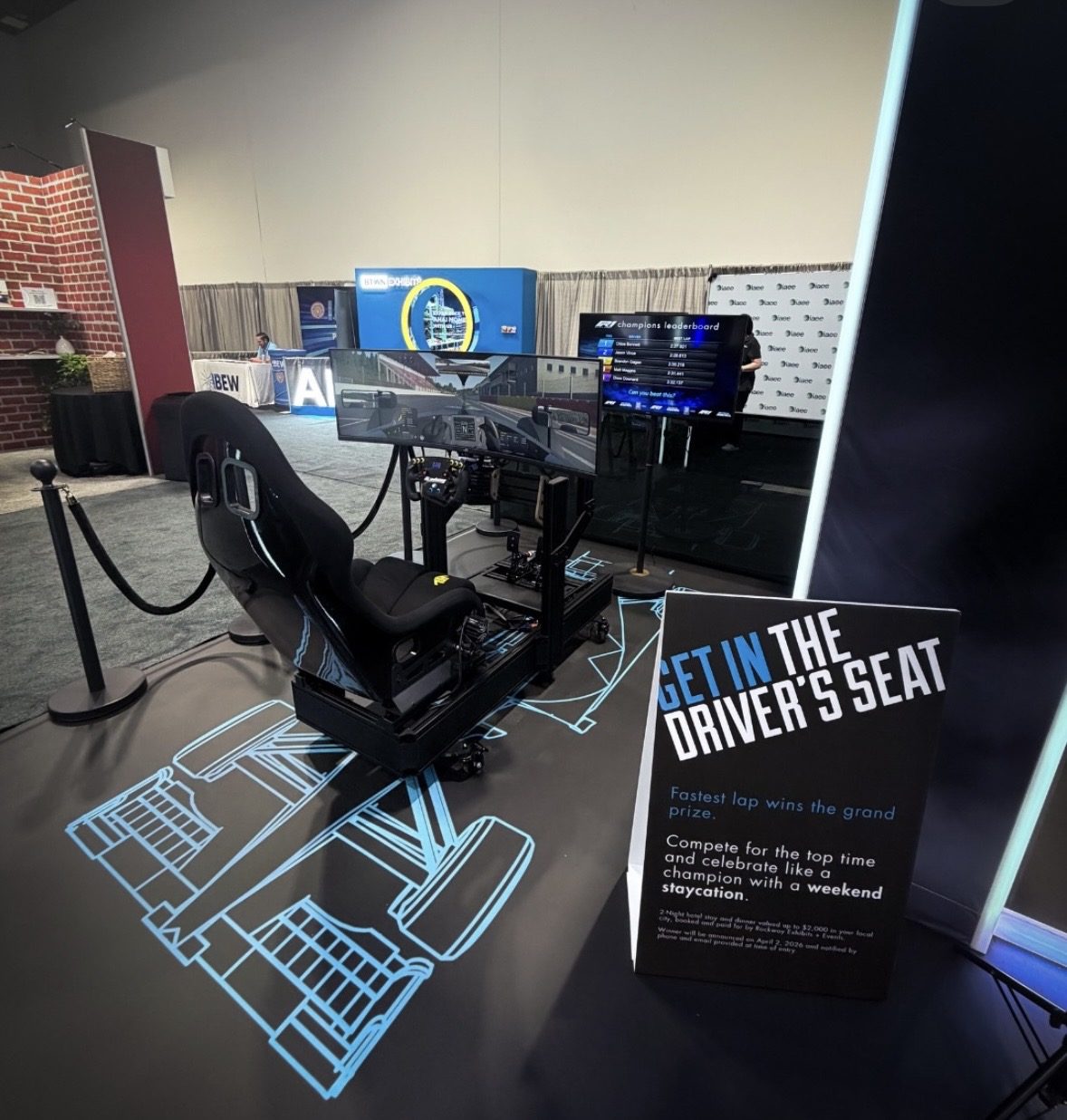
A trade show booth has one job before it has any other job: make people stop. A racing simulator does that from across the hall, and it holds them long enough for your team to start a conversation.
FOOTFALL IS NOT THE HARD PART
Getting people past your booth is the show organizer’s job. Getting them to stop, stay, and talk to someone is yours, and it is where most booths lose.
A simulator solves the stopping problem structurally. It is tall, it is loud, it has a screen with motion on it, and there is usually a small crowd around it. People walk toward that without being asked. More usefully, a driver is stationary for the length of a session, and the people waiting are stationary too, which gives your team a queue of people who are standing still and have nothing else to do.
Dwell time is the metric that matters
A booth that people glance at as they pass converts almost nobody. A booth where someone spends four minutes in a seat and another few minutes waiting gives your sales team a real window. That is the difference a simulator makes, and it is why the format of the activation matters more than the hardware.
RUN IT FOR LEADS, NOT FOR FUN
Keep sessions short
Long sessions feel generous and perform badly. Short timed runs keep the queue moving, keep the leaderboard competitive, and mean more people through the booth over the day.
Put the leaderboard where the hall can see it
A live leaderboard turns a one off go into a reason to come back. People check whether they have been knocked off, which brings them past your team a second time.
Make the prize worth returning for
An end of day or end of show prize for the fastest lap gives people a reason to return on day two and a natural reason to leave contact details.
Brief your team on the handoff
The simulator creates the opportunity. Your team still has to take it. Decide in advance who talks to the person in the seat, who works the queue, and what the qualifying question is.
Booth space, ceiling height, power drop and load-in windows all affect what we can install. Send us the exhibitor kit and we will tell you what fits before you commit.
WHAT WE HANDLE
TWO OTHER WAYS TO RACE
WHAT PLANNERS ASK
EXHIBITING IN
FLORIDA THIS YEAR?
Send us the show, your booth size and your dates. We will tell you what fits and what it costs.