THE RIG IS ALSO
THE FUNDRAISER
At most events the simulator draws a crowd and something else does the work. At a fundraiser it can do both, because paying to race is an easier ask than paying to attend.
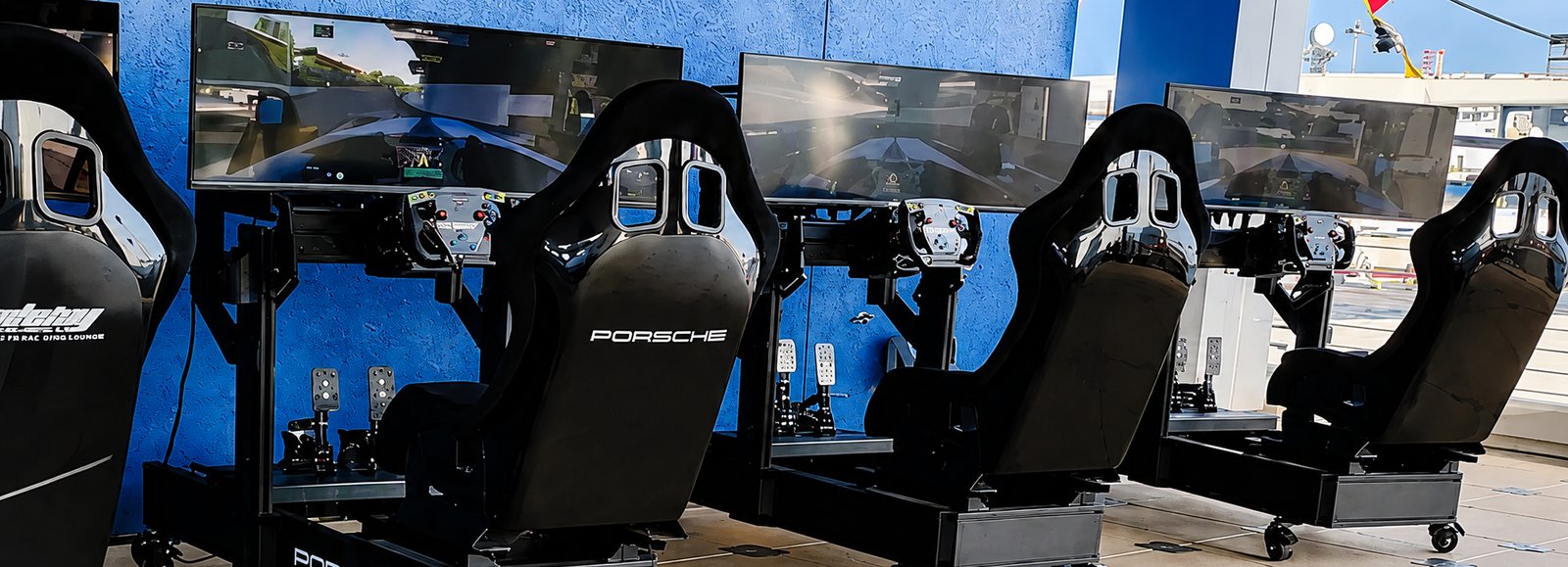
PEOPLE WILL PAY TO RACE
The hardest part of a charity event is usually the ask. A simulator makes it easier, because entering a race is a transaction people understand and enjoy rather than a donation they feel obliged to make.
It also produces something a raffle cannot: a leaderboard that keeps updating all evening, which gives people a reason to enter more than once. Repeat entries are the mechanic most fundraising formats are built around.
Mechanics that work
- Pay per run. A small amount per attempt, with people re-entering to beat their own time or somebody else’s.
- Sponsored rig. A local business covers the activation cost in exchange for branding on the wrap and the leaderboard, so more of what is raised goes to the cause.
- Challenge a guest driver. An invited driver sets a time and people pay to try to beat it.
- Team entry. Companies enter teams for a fixed fee, which turns one donation into several attendees.
THE OCCASIONS
PLANNING IT
Decide the mechanic before the format
How you are collecting money should decide the racing format, not the other way round. Pay per run wants short sessions and high throughput. Team entry wants a relay. A challenge time wants one circuit and one car all night.
Consider a sponsor for the activation
One approach is to have a local business cover the cost of the rig in exchange for branding on the wrap and the leaderboard, so that less of what you raise goes back out on costs. We do not source or guarantee sponsors, and any sponsorship is an arrangement between you and them.
Think about entry price against throughput
Each simulator handles roughly 15 to 40 drivers an hour depending on session length. Short runs at a lower price and long sessions at a higher one are both workable, and which suits you depends on your audience and how long the event runs.
Delivery, setup, calibration, staffing and teardown are typically included, and your quote sets out exactly what is covered and for how many hours. We are a commercial supplier, not a charity partner. Collecting entries, handling funds, refunds, prizes, receipts and any tax, charity registration or local rules that apply to your event are the organizer’s responsibility, not ours.
ALSO WORTH READING
TWO OTHER WAYS TO RACE
WHAT PLANNERS ASK
RAISING MONEY
IN FLORIDA?
Tell us the cause, the date and the format you have in mind. We will tell you what works.